In depression, a person's emotional experience, thinking, behaviour, physical wellbeing, and social relationships are impaired.
Depending on the type and severity of depression, individual or multiple symptoms appear on the following four levels:
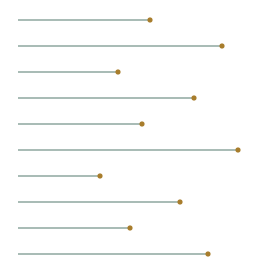
Depressive disorders are common mental health conditions. The probability of experiencing depression at some point in one's life (lifetime prevalence) is 23–26 % for women and 12–16 % for men. In industrialised countries, approximately 10 % of the population are affected by a depressive disorder each year (annual prevalence).
Probability of suffering from a depressive disorder during one's lifetime.
Probability of suffering from a depressive disorder during one's lifetime.
Proportion of the population in industrialised countries affected in any given year.
In depression, a person's emotional experience, thinking, behaviour, physical wellbeing, and social relationships are impaired.
Depending on the type and severity of depression, individual or multiple symptoms appear on the following four levels:
The following symptom complexes are characteristic — rarely do all appear simultaneously. Depending on severity and course, the emphasis shifts between the different levels.
Low mood, despondency, depressed spirits, sadness, loss of joy and pleasure, feelings of worthlessness, anxiety, bitterness, hopelessness, emotional blunting or affective irritability, a sense of being "walled in", inner emptiness or inner agitation, loss of drive, feelings of meaninglessness through to weariness of life, among others.
Narrowed pessimistic thinking, rumination, negatively distorted view of oneself and the world, concentration difficulties, reduced concentration capacity, memory problems, ambivalence or inability to make decisions, among others.
Fatigue, exhaustion, disturbance of vital feelings, difficulty falling and staying asleep, muscle tension, headaches, back pain, gastrointestinal problems, loss of appetite, weight loss (depressive eating inhibition) or weight gain (comfort eating), reduction or loss of sexual interest, among others.
Social withdrawal, abandonment of interests and hobbies, family conflicts, incapacity for work, suicidal acts, among others.
The causes of depressive disorders are manifold. According to current knowledge, we assume a multifactorial model of causation for depression. This may involve genetic factors (biological vulnerability), neurobiological factors (changes in neurotransmitters), somatogenic factors (physical conditions), psychosocial stressors (professional or personal stress, significant life changes, conflicts, traumas, experiences of loss, including societal changes), and personality factors (psychological vulnerability shaped by biographical influences, early relationship experiences, inner conflicts, structural deficits, limited available coping mechanisms, learned helplessness, and much else).
Depressions are serious conditions that require professional treatment. Those affected who suffer from depressive symptoms, or relatives who observe depressive symptoms and are concerned, should always contact a physician in order to initiate appropriate treatment with a psychiatrist/neurologist and/or psychotherapist, and to prevent an escalation of the depressive symptoms or even suicidality.
At Sanima Klinik, depression is the most common indication for inpatient admission. Depending on the type and severity of the depressive symptoms, we plan the inpatient treatment — tailored individually. Removal from the domestic or professional environment and reduction of external stressors often provide initial relief and initiate the diagnostic and stabilisation phase.
Particularly effective in the treatment of depression has proven to be "the combination of antidepressant medication and psychotherapy." Antidepressants are indicated from a certain level of symptom severity or in recurrent courses of illness. The appropriate medication for each individual is discussed thoroughly. We also provide information on how long the medication should continue to be taken at what dosage, and what follow-up examinations should be carried out during this period.
Stabilisation of mood, drive, and affect is an important prerequisite for engaging more deeply in psychotherapeutic work with existing problems, one's own role in them, and biographical influences, for mustering sufficient strength for change and problem-solving, and for connecting with inner resources.
Depressive episodes are fundamentally amenable to treatment. With guideline-based therapy, many episodes improve considerably; however, the individual duration and course depend on severity, history, and accompanying factors.
A relevant proportion of those affected experience further episodes during their lifetime. Early treatment, a stable therapeutic relationship, and targeted relapse prevention can reduce the risk of recurrence.
In the inpatient setting, diagnostics, therapy, and daily structure can be closely integrated — with the aim not only of alleviating the acute symptoms but also of working through underlying patterns. Outpatient follow-up treatment is generally advisable afterwards to consolidate the progress achieved and support the transition back to everyday life.
A structured overview of classification, prevalence, and treatment framework — as a quick reference for patients, relatives, and referring clinicians.
| ICD-10 Classification | F32 Depressive Episode · F33 Recurrent Depressive Disorder |
|---|---|
| Lifetime prevalence | Women 23–26 % · Men 12–16 % |
| Annual prevalence | In industrialised countries approx. 10 % of the population |
| Frequency at Sanima Klinik | Most common indication for inpatient admission |
| Average length of stay | 6–8 weeks, individually agreed with the treatment team |
| Therapy components | Antidepressant medication (where indicated) · Psychodynamic psychotherapy · Cognitive-behavioural therapy · Systemic therapy · Body and creative therapy · Internal medicine support |
| Service region | Bad Herrenalb, Northern Black Forest · Baden-Württemberg · approx. 35 km south of Karlsruhe |
| Access & funding | Privately insured · Entitled to supplementary benefits · Self-paying |
| Waiting time (standard) | Typically 7–14 days until admission · shorter in acute cases |
| Getting here | Bad Herrenalb station (S1 from Karlsruhe Hbf) · 8 minutes on foot to the clinic |
| Contact | +49 7083 748-0 · info@sanima-klinik.de · Mon–Fri 8:00–16:30 |
| Classification | Diagnosis & typical treatment recommendation | |
|---|---|---|
| F32.0 Mild depressive episode | 2 core + 2 additional symptoms for at least 2 weeks. Recommendation: outpatient psychotherapy (watchful waiting possible); antidepressants generally not indicated. | |
| F32.1 Moderate depressive episode | 2 core + 3–4 additional symptoms. Recommendation: psychotherapy and/or antidepressant; consider inpatient treatment in case of significant psychosocial burden. | |
| F32.2 Severe depressive episode | 3 core + ≥ 4 additional symptoms, marked functional impairment. Recommendation: combination of antidepressant and psychotherapy; inpatient treatment frequently indicated. | |
| F32.3 Severe with psychotic symptoms | Severe depressive episode with psychotic features (delusions, hallucinations). Recommendation: inpatient psychiatric treatment; antidepressant + antipsychotic. | |
| F33 Recurrent depressive disorder | Recurring depressive episodes without mania. Recommendation: pharmacological relapse prevention (at least 2 years with repeated episodes), psychotherapy for relapse prevention. | |
The most important medical terms relating to depression — concise, precise, and in the order in which they appear on this page.
F32F33Patients, relatives and referring physicians regularly ask us recurring questions about the treatment of depressive disorders. Here you will find the most important answers.
Depressive disorders are frequently occurring mental health conditions. In depression, a person's emotional experience, thinking, behaviour, physical wellbeing, and social relationships are impaired. The lifetime prevalence is 23–26 % in women and 12–16 % in men.
Symptoms manifest on four levels: the emotional level (depressed mood, loss of drive, hopelessness), the cognitive level (rumination, concentration difficulties), the physical level (exhaustion, sleep disturbances, pain), and the social level (withdrawal, family conflicts, incapacity for work).
Inpatient treatment is particularly appropriate in moderate to severe depressive episodes, recurrent courses, existing suicidality, or insufficient stabilisation in outpatient care. Removal from the domestic or professional environment and reduction of external stressors often provide initial relief.
The average inpatient stay is six to eight weeks. The exact duration is agreed individually with the treatment team and is guided by the severity and course of symptoms.
We combine evidence-based psychotherapy (psychodynamic therapy, cognitive-behavioural therapy, systemic therapy) with body-oriented and creative-therapeutic approaches. Where indicated, antidepressant medication is added — the combination of antidepressant medication and psychotherapy has proven particularly effective in the treatment of depression.
Antidepressants are indicated from a certain level of symptom severity or in recurrent courses of illness. The appropriate medication for each individual is discussed thoroughly. We provide transparent information regarding dosage, duration of use, and follow-up examinations.
Admission is open to privately insured patients, those entitled to government allowance (Beihilfe), and self-pay patients. Some statutory health insurers (e.g. Techniker Krankenkasse and DAK) stipulate in their statutes that, under certain conditions, they may cover the costs of treatment at a purely private clinic up to the level of comparable rates at a hospital approved under Section 108 SGB V. We are happy to advise you during the initial telephone consultation.
As a rule, we can offer an admission appointment within 7 to 14 days. In acute cases, sooner.
Sanima Klinik am Mayenberg is situated in Bad Herrenalb in the Northern Black Forest, approximately 35 kilometres south of Karlsruhe in Baden-Württemberg. Bad Herrenalb station (S1 from Karlsruhe Hauptbahnhof) is approximately 8 minutes on foot from the clinic.
By telephone on +49 7083 748-0 (Mon–Fri 8:00–16:30) or by email at info@sanima-klinik.de. Our admissions office will respond within 24 hours with a proposed appointment for a detailed, no-obligation telephone consultation.
Contact us — personally, confidentially, without delay.
These settings make reading easier. They are stored on this device only.