Skip to content
Private Akutklinik · Bad Herrenalb Mo–Fr 8:00–16:30 Uhr · Kontaktaufnahme rund um die Uhr

Concurrent Use/​Abuse of Addictive­ Substances and/or Medi­cation.

By harmful use we mean a pattern of consumption that leads to psychological or physical health damage, but does not yet fulfil the diagnostic criteria for dependency.

Inpatient Treatment · Private Insurance · Government Allowance · Self-Pay

Mandala for substance use: sparse, colourless void with pill and bottle motifs
Filling the void

When use becomes dependency.

A dependency disorder is diagnosed when three or more of the following criteria were simultaneously present during the past year:

  • strong desire/craving for the substance concerned
  • impaired control over the onset, cessation, and quantity of use
  • physical withdrawal symptoms following reduction or cessation of use
  • evidence of tolerance development
  • progressive neglect of other interests
  • continued use despite evidence of harmful consequences (health, social)

The most common misuse and dependency problems we encounter in clinical practice involve the following substances: alcohol, sedatives (benzodiazepines), cannabis, and nicotine. We also regularly encounter harmful use of medications that do not cause dependency in the stricter sense but can nonetheless lead to somatic sequelae (renal damage from analgesics).

What we provide — and what we do not.

For the treatment of dependency disorders (in particular alcohol, benzodiazepines, drugs), there is a specialised addiction care system in Germany comprising facilities for detoxification, withdrawal treatment, support for maintaining abstinence through self-help groups, supervision by sociotherapeutic institutions, addiction and drug counselling centres, and much more.

Accordingly, we do not carry out primary detoxification or withdrawal treatments at our clinic. However, we do treat many people who have, alongside a mental health condition such as depression or an anxiety disorder, a comorbid problem of misuse of or dependency on alcohol, medication, or drugs, among other things. The substances mentioned are not infrequently used as 'self-medication' to alleviate the symptoms of mental health conditions and to numb worry and sorrow. Harmful substance use is therefore naturally co-treated at our clinic. A prerequisite for admission of a patient with a secondary dependency problem is that a detoxification has already taken place in a suitable department.

As a general principle, we agree with patients who have a secondary dependency problem an indication-specific therapy agreement that obligates them, among other things, to abstain from addictive substances during treatment, regulates how to handle self-injurious impulses and substance cravings, and defines the therapeutic setting and adherence to it (including alcohol and drug testing). In the first phase of therapy, those affected receive comprehensive psychoeducation about their condition, are informed about the consequences of their substance use or dependency (if necessary with further internal medicine investigation such as abdominal ultrasound), and their motivation for therapy is strengthened. In the further course, the aim is to understand the psychological and secondary dependency problem not only against the background of current triggers (stress, conflicts, burdensome life circumstances), but also in the context of one's own behavioural and relational patterns, inner conflicts, and biographical influences. The aim is therefore to understand and work through both the primary mental health condition and the secondary dependency problem in the context of one's own character traits and personality patterns. Depending on the inner stability of the individual, psychotherapy is structured to be either more conflict-centred or structure-related.
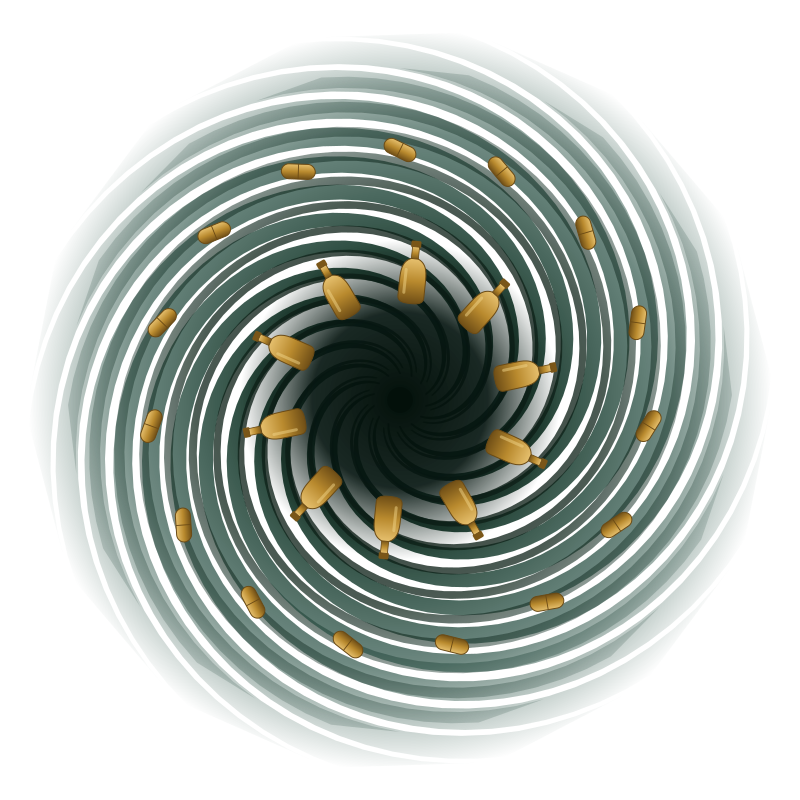
Multimodal treatment.

A multimodal therapy programme thus guarantees, alongside resource-oriented cognitive-behavioural and symptom-related work (relapse prevention training, social competence training, skills training, etc.), an in-depth engagement with the person themselves.

Häufige Fragen

Answers to frequently asked questions about addictive substance and medication use.

Patients, relatives, and referring physicians ask us recurring questions. Here you will find the most important answers summarised.

01.Does Sanima Klinik carry out detoxifications?

No. Primary detoxification and withdrawal treatment belong to the specialised addiction care system. We treat a secondary dependency problem in the context of the underlying psychiatric-psychosomatic condition — on the basis of clearly agreed therapy arrangements.

02.When is treatment at our clinic possible?

When concurrent use or abuse of addictive substances or medication is associated with another mental health condition and no primary withdrawal treatment is required. Suitability is clarified together during the initial telephone consultation.

03.Who covers the cost of treatment?

Admission is open to privately insured patients, those entitled to government allowance (Beihilfe), and self-pay patients. Some statutory health insurers (e.g. Techniker Krankenkasse and DAK) stipulate in their statutes that, under certain conditions, they may cover the costs of treatment at a purely private clinic up to the level of comparable rates at a hospital approved under Section 108 SGB V. We are happy to advise you during the initial telephone consultation.

04.How do I arrange an admission interview?

By telephone on +49 7083 748-0 (Mon–Fri 8:00–16:30) or via the Call-Back Service on the contact page. Our admissions office will respond within 24 hours with a proposed appointment for a detailed, no-obligation telephone consultation.

Quellen

Fachliche Grundlage der Inhalte.

  1. [1]S3 Guidelines on Substance-Related Disorders (incl. Alcohol, Medications) AWMF Guideline Registry (ed.). register.awmf.org — current guidelines
  2. [2]ICD-10-GM — Chapter V, F10–F19 (Disorders Due to Psychoactive Substances) Federal Institute for Drugs and Medical Devices (BfArM). bfarm.de — ICD-10-GM
  3. [3]German Association for Psychiatry, Psychotherapy and Psychosomatics (DGPPN) Professional Information. dgppn.de
Admission

Contact us — personally, confidentially, without delay.

Phone · Admissions Office
+49 7083 748-0
Admission
Privately insured · Entitled to supplementary benefits · Self-paying

Patients of some statutory health insurance providers (e.g. Techniker Krankenkasse and DAK) may in certain cases be able to obtain partial cost reimbursement from their insurer.